
Happy 3rd anniversary
Africa Educates Her Campaign - Angola
International Day of the Girl Child
Invest in Girls' Rights: Our Leadership, Our Well-being
Video on demand
Fraternal greetings,
Ladies and gentlemen, welcome to our party. Our hybrid platform celebrates another milestone!
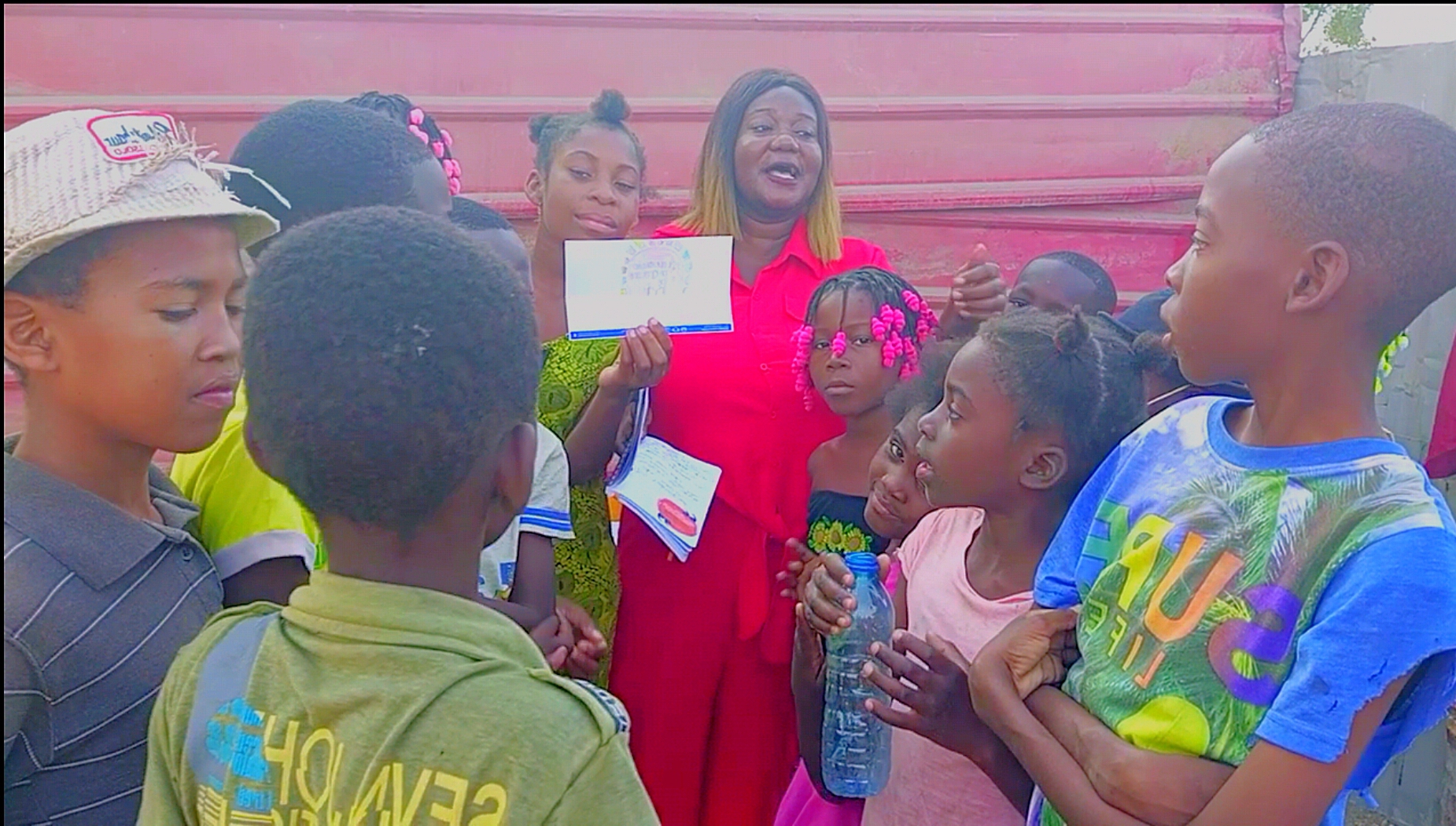
My name is Sofonie Dala. Today we gather here to celebrate the 3rd anniversary of Africa educates Her campaign.
An indispensable campaign that was launched in 2020 to overcome the threats that Covid-19 brought to the education of women and girls.
It was exactly 3 years ago that Africa Educates Her campaign was launched to bring awareness around issues that hinder girls and women from accessing education and a rallying call for youth, educators, civil society organisation development partners and AU Member States to take positive actions that guarantees girls return to school.
It was on September 11, 2020 that the campaign officially went live in Africa, but we in Angola started our investigations in August 2020. We have been running the campaign for 3 years, and today we are celebrating our 3rd anniversary.
For our program today, children and girls are learning about the sustainable development goals. Specifically the goals 4 and 5.


When we first discovered this community, these children and girls present here were very young, and many of them were outside the educational system even before the pandemic.

CLICK HERE TO SEE: Wow! We are Celebrating the successful completion of the Season 3 of Africa Educates Her Campaign-Angola. Don't Miss This Exciting Day! Webisode 41 (she-leads.blogspot.com)
https://she-leads.blogspot.com/2021/02/wow-we-are-celebrating-successful.html
But today, after 3 years of advocacy, we notice that the level of illiteracy in this community has reduced a lot. Many children have returned to school, and their parents have been mobilized to place them in schools. As a result, all the children here are already studying.
Isn't it true children?
Yes, we are already studying.
How many of you are still not studying?
That one.
Only one person is not studying. Whereas in 2019, 95% of these children here were not studying.
We also want to take this opportunity to celebrate the International Day of the Girl Child, which is celebrated annually on October 11th.
Are you understanding children?
Yes, we are understanding and learning.
When is the "International Day of the Girl Child" celebrated?
It is celebrated on the 11th.
Of which month?
of October.
Annually?
Yes.
The theme of International Day of the Girl this year is, Invest in Girls' Rights: Our Leadership, Our Well-being.
We want to ensure that all girls have the right to quality education, we want to advance the progress in gender equality, we want to ensure that all girls have access to everything from maternal health care and parenting support for adolescent mothers, to digital and life skills training; from comprehensive sexuality education to survivor support services and violence prevention programs.
As well as, continue to provide non-formal community training on sustainable development objectives so that they are able to face and combat humanitarian crises, climate change, among others. Reason why we are investing in SDG 5 gender equality and SDG 4, which is quality education for children in this rural community.

Therefore, today we are pleased to celebrate the third anniversary of Africa Educates Her campaign.
Happy anniversary!
Hurrahhhh!
Happy anniversary, happy anniversary, happy anniversary!
We want to study, we want to study, we want to study!

FEEDBACKS
INTERVIEW WITH TERESA
This is the third anniversary of the campaign that encourages many women to return to school. I have been actively participating since 2020.
I support sustainable development goal number 4 which is quality education. Let's all invest in girl's and women's education.

INTERVIEW WITH LUISA AND LAURINDA (MOTHER AND DAUGHTER)
TESTIMONY
Luisa is a 40-year-old woman and single mother, she is accompanied by her 20-year-old daughter Laurinda. The two participate in the Africa Educates Her campaign, since 2021. When we spoke to Luisa for the first time 3 years ago, she was not studying, she had left school in her youth due to early marriage. Her daughter Laurinda had stopped studying 3 years ago due to the negative impact of Covid-19.
Today we invite them to give their testimonies and tell us how in just 3 years their lives were transformed, and the important role that the Africa Educa Ela campaign played at the time.

INTERVIEW
Hello Africa Educates Her campaign!
Are you mother and daughter?
Yes we are.
Hi what's your name?
I'm Luisa.
Luisa, how are you and how old are you?
I am fine. I am 40 years old.
Wow, you are very beautiful and in good shape, you don't even look like you are 40 years old.
Thank you very much.
We are here to celebrate the 3rd anniversary our Africa Educates Her campaign in Angola.
A campaign that was born in 2020 due to the emergence of covid-19 with the aim of motivating girls to return to school during and after the Covid-19 pandemic.
We welcome you because you participated in the campaign at the beginning when Covid-19 was raging at the top, at the time you were not studying. So we would like to know how your life is now, compared to before and after the covid-19 pandemic.
Well, before I wasn't studying because I already had a husband and I was raising my children so I couldn't study.
But then, I started to receive motivation from someone and I also started to interact with your campaign, which motivated me to go back to school.
I went back to studying again, I had to repeat the eighth and ninth grades, then I entered high school to do my nursing course. I am currently studying medicine.
Are you enjoying the experience of going back to school again?
Yes, I really enjoy studying.
It's beneficial, isn't it?
Yes, it is very useful and beneficial.
What advice would you give to those women who have also dropped out of school due to child pregnancy and child marriage, who one day hope to return to school too?
I would tell them not to lose hope. One day they will also be able to do what I did, they will be able to study again. They just need to have faith and that willpower.
And who is she?
She is my daughter, Laurinda
Is she your first daughter?
No, she is my second daughter.
How old is she?
I'm 20 years old.
Ok, Laurinda, tell us a little about yourself and how your life is going. The last time we spoke was at the beginning of Covid-19, you said that the school you were at was not stable and that you were also not studying due to Covid-19. Tell us how your life is going now.
Well, at first, covid-19 stopped many people's lives and it also stopped my studies. I stayed at home for over a year without studying. But thank God I'm back to school, I'm attending high school.
Are you still studying at the same school?
No, I'm not at that school anymore. Now I'm studying at a state school.
Is it more stable to study at a state school?
Yes, it's more stable, I'm also studying medicine.
Are you following the same course as your mother?
Yes, I am also studying medicine like my mother.
As you said, Covid-19 has negatively impacted the lives of many people, and many girls like you have not returned to school.
Do you know any girl who was also negatively impacted by Covid-19 and did not return to school?
Yes, I know many. Some unfortunately didn't go back to studying because they got pregnant and were paralyzed with no chance of going back to studying, others went back to studying.
For girls, I would advise them to go back to school, because education is the key to the future.
So the advice I give to girls is to go back to school. Those who don't have the possibility should do their best to go back to studying, at least look for a school tutoring place to educate themselves, because this is necessary.
Very good. Studying is necessary and important.
Alright. Thank you very much.
Bye see you soon.
Click here to watch their interview in early 2021
Luisa
https://she-leads.blogspot.com/2021/01/africa-educates-her-campaign-angola_17.html?m=1
Laurinda
https://sofoniedala.blogspot.com/2022/01/what-happened-on-this-blog-last-years.html

Song I don't go to school anymore - there's a world pandemic. Don't let your faith fade away!
We also want to thank and honor our gospel singer Loide Paulino for composing and singing the song for Africa Educates Her Campaign in Angola.

Back in 2020
Today we don't have interviews, we have a musical concert. These songs go out to all the people who were impacted by Covid-19 pandemic.
Ladies and gentlemen, meet our singer Loide with the song '' Don't let your faith fade away.''
https://sofoniedala.blogspot.com/2020/10/congratulations-we-are-celebrating.html?m=1
Africa Educates Her Campaign Youth Ambassador
At the end of 2020, Sofonie Dala was elected one of the 5 youth Ambassador throughout Africa, which will bring awareness of the campaign into the different regions of the continent. She immediately began advocating for the Africa Educates Her Campaign in her community and beyond.
https://sofoniedala.blogspot.com/2020/12/we-are-back-africa-educates-her.html
Watch the video of the concert at 55:45min is Sofonie Dala's speech

Video on youtube: https://youtu.be/pNUEP5gBmW0
As an alumni of the African Union / Center for Girls and Women's Education in Africa Sofonie Dala pledges to stand up for girls' right to education by supporting the Africa Educates Her Campaign in Southern Africa.Galeria




Insights & background
This campaign has impacted millions of people of people around the world in just 3 years. All our work related to the Africa Educates Her campaign is well documented and well maintained.
https://she-leads.blogspot.com/2023/09/coming-very-soon-celebrating-3rd.html
Launching in Angola for the first time, Maria was the first girl to be featured:
https://sofoniedala.blogspot.com/2020/08/covid-19-africa-educates-her-campaign.html?m=1

INTERNATIONAL DAY OF THE GIRL CHILD
Investing in Girls’ Rights, Education, Safety and Leadership in Southern Africa
Why urgent action and investment matter
There is an urgent need for greater political commitment, sustainable financing and coordinated action to ensure that every girl can exercise her rights, access essential services and fulfil her potential. Across Southern Africa, millions of girls continue to face barriers to education, healthcare, digital inclusion, economic opportunity and meaningful participation in decision-making. These challenges are particularly severe for girls living in poverty, rural and underserved communities, and those with disabilities.
Responding to girls’ calls for change requires more than reaffirming international commitments. Governments, regional institutions, development partners, businesses, civil society and communities must invest in practical, measurable and accountable solutions. Girls must not only benefit from development programmes; they must help design, implement and evaluate them.
Across the region, girls are already demonstrating leadership as community advocates, young entrepreneurs, climate activists, innovators and defenders of human rights. Their ideas, experiences and local knowledge are essential to building inclusive, resilient and sustainable societies.
The message is clear: girls are not merely the leaders of tomorrow. They are leaders, innovators and agents of change today.
Did you know?
The following global and regional realities highlight why urgent action is needed:
Education: Globally, nearly one in five girls does not complete lower-secondary education, while almost four in ten do not complete upper-secondary education. In Angola, UNICEF reported that girls face substantial barriers to entering and completing secondary education. <Cite refs={["turn639259search1","turn639259search8"]}/>
Digital inequality: In low-income countries, approximately 90% of adolescent girls and young women do not use the internet. Expanding affordable connectivity, digital literacy and access to technology is essential to ensuring that girls in Southern Africa are not excluded from the digital economy.
Unpaid care work: Girls worldwide aged 5–14 spend approximately 160 million more hours each day on unpaid care and domestic work than boys. In communities where girls are expected to collect water, care for siblings or perform extensive household duties, these responsibilities can limit their time for school, rest and personal development.
HIV and adolescent health: Adolescent girls and young women in Eastern and Southern Africa face a disproportionate risk of HIV. UNICEF reported in May 2024 that adolescent girls in the region were six times as likely as boys to acquire HIV. Access to accurate health information, confidential and youth-friendly services, and protection from gender-based violence is essential. <Cite refs={["turn639259search4"]}/>
Violence and child marriage: Across the Southern African Development Community (SADC), child marriage and violence against girls remain serious concerns. These violations can interrupt education, undermine health, restrict personal autonomy and perpetuate cycles of poverty. <Cite refs={["turn639259search22","turn639259search12"]}/>
Teenage pregnancy: In Angola, adolescent pregnancy remains an important public health, education and development challenge. UNICEF has highlighted how stigma, inadequate access to information and limited social protection can leave pregnant adolescents and young mothers excluded from essential support. Girls must be able to continue their education and access appropriate healthcare without discrimination. <Cite refs={["turn639259search8","turn639259search6"]}/>
These challenges are interconnected. A girl who cannot access education may have fewer employment opportunities; a girl exposed to violence may struggle to remain in school; and a girl without internet access may be excluded from information, digital skills and emerging economic opportunities.
Background: From global commitments to local action
In 1995, at the Fourth World Conference on Women in Beijing, governments adopted the Beijing Declaration and Platform for Action, establishing a landmark framework for advancing the rights of women and girls.
On 19 December 2011, the United Nations General Assembly adopted Resolution 66/170, designating 11 October as the International Day of the Girl Child. The observance recognises girls’ rights and draws attention to the specific challenges they face around the world.
The day provides an opportunity to assess progress, amplify girls’ voices and strengthen efforts to eliminate discrimination, violence and exclusion.
For Southern Africa, these commitments must translate into adequately funded national policies, stronger child-protection systems, accessible public services and opportunities for girls to participate meaningfully in decisions affecting their lives.
Southern Africa’s priorities: What needs to change?
1. Keep every girl in school.
Governments and partners must invest in safe schools, trained teachers, adequate sanitation, menstrual health products, school meals where needed, and financial support for disadvantaged families. Pregnant girls and young mothers must be supported to continue or resume their education. Rural girls should not have to choose between schooling and their families’ basic survival needs.
2. End child marriage, teenage pregnancy and gender-based violence.
Prevention must involve families, schools, traditional and community leaders, boys and men, healthcare providers and law enforcement. Girls need accessible reporting mechanisms, survivor-centred support, age-appropriate health education and effective protection from exploitation, coercion and abuse.
3. Close the digital divide.
Affordable internet, electricity, digital devices and digital literacy should be treated as essential enablers of education and economic participation. Investment should prioritise rural communities, low-income households and girls with disabilities. Girls must also be protected from online harassment and exploitation.
4. Recognise and redistribute unpaid care work.
Access to clean water, reliable energy, childcare and community support services can reduce the disproportionate burden of domestic responsibilities on girls. Families and communities must promote the equal sharing of household duties so girls have time to learn, develop skills, rest and participate in public life.
5. Invest in girls’ health and well-being.
Accessible adolescent-friendly health services must address HIV prevention and treatment, menstrual health, nutrition, mental well-being and sexual and reproductive health information. Services should be confidential, respectful, evidence-based and responsive to the needs of adolescents.
6. Make inclusion a reality for every girl.
Girls with disabilities, girls in remote communities, those living in poverty, displaced girls and young mothers must not be left behind. Public services, schools, information and participation opportunities must be accessible and designed around the different circumstances girls experience.
7. Fund girls’ leadership and locally led solutions.
Governments, donors and the private sector should provide sustained funding, mentorship, training and platforms for girls’ organisations and youth-led initiatives. Girls must have a meaningful voice in decisions about education, climate resilience, public health, technology and community development.
Girls and the Sustainable Development Goals
The 2030 Agenda for Sustainable Development, adopted by world leaders in 2015, offers a shared framework for building a more equitable and sustainable future.
Advancing girls’ rights is fundamental to achieving all 17 Sustainable Development Goals, particularly:
SDG 3: Good Health and Well-being.
SDG 4: Quality Education.
SDG 5: Gender Equality.
SDG 6: Clean Water and Sanitation.
SDG 7: Affordable and Clean Energy.
SDG 8: Decent Work and Economic Growth.
SDG 9: Industry, Innovation and Infrastructure.
SDG 10: Reduced Inequalities.
SDG 13: Climate Action.
SDG 16: Peace, Justice and Strong Institutions.
SDG 17: Partnerships for the Goals.
For Southern Africa, investing in girls also means strengthening climate resilience, improving access to essential services, expanding economic opportunities and building communities capable of responding to social, environmental and economic challenges.
From commitment to accountability
Progress must be measured not only by the number of policies adopted or events organised, but by the changes girls experience in their daily lives.
Governments and development partners should establish measurable targets, publish progress reports, allocate adequate budgets and consult girls directly when designing interventions. Data should be disaggregated by age, disability, location and socioeconomic circumstances to identify who is being left behind.
Regional cooperation through SADC, the African Union and the United Nations can help countries share effective practices, strengthen accountability and accelerate progress towards gender equality.
A call to action
Every girl deserves to grow up safe, healthy, educated and free to determine her future. Her opportunities should not depend on her family's income, her geographical location, her disability or the expectations imposed on her because she is a girl.
Southern Africa cannot achieve inclusive development while millions of girls face preventable barriers to their rights and potential. Investing in girls is not charity; it is a commitment to human rights, social justice, economic development and a sustainable future.
Let us move beyond promises to measurable action. Let us listen to girls, resource their solutions, protect their rights and create institutions in which their leadership is recognised and valued.
When girls thrive, families become stronger, communities become more resilient and nations move closer to a just and sustainable future.
No girl left behind. No potential wasted. No commitment without action.
Comments
Post a Comment